Loading... Please wait...
Categories
New Products
-
 $9.99
$9.99
-
 $9.99
$9.99
-
 $199.00
-
 $0.00
$0.00
-
 $129.00
Our Newsletter
- Home
- Single Herbs Powder( 100g/bottle ) ---中药单味(粉剂)
- Precipitating Medicinal---泻下药
- Yuanhua ( Flos Genkwa)---芫花
- Home
- Single Herbs Powder( 100g/bottle ) ---中药单味(粉剂)
- Precipitating Medicinal---泻下药
- Drastic water-expelling Medicinal---峻下逐水药
- Yuanhua ( Flos Genkwa)---芫花
- Home
- Natural Herbs (1 Ib/bag )---天然草药
- Yuanhua ( Flos Genkwa)---芫花


Product Description
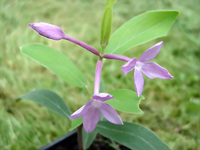
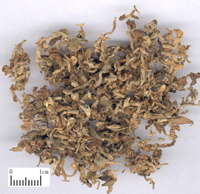
The source is from the flower bud of Daphne genkwa Sieb.et Zucc., family Thymelaeaceae. It is collected before bloom in the spring and dried in the sun. The saw form or the one prepared with vinegar isused as a medicine.
[ Medicinal Properties ]: Bitter, pungent, warm, toxic; relate to lung, spleen and kidney meridians.
[ Medicinal Efficacies ]: Purge water and expel fluid; resolve phlegm to relieve cough; kill worms and treat pyocutaneous disease.
[ Usage and Dosage ]: Decoction 1.5-3g. For powder, 0.6g. It is prepared with vinegar and then pounded into powder for oral use, once a day.
[ Precautions ]: It is contraindicated in pregnant woen or the weak. It is incompatible with Gancao.
[ Medicinal Properties ]: Bitter, pungent, warm, toxic; relate to lung, spleen and kidney meridians.
[ Medicinal Efficacies ]: Purge water and expel fluid; resolve phlegm to relieve cough; kill worms and treat pyocutaneous disease.
[ Usage and Dosage ]: Decoction 1.5-3g. For powder, 0.6g. It is prepared with vinegar and then pounded into powder for oral use, once a day.
[ Precautions ]: It is contraindicated in pregnant woen or the weak. It is incompatible with Gancao.
[ Clinical Applications]: 1. Fluid retention in the chest and hypochondrium, edema and tympanites It has similar effect to Gansui and Jingdaji and it is good at purging fluid in the chest and hypochondrium and resolving phlegm to relieve cough. it is used usually together with Gansui and Jingdaji, such as in Shizao Decoction.
2. Cough and dyspnea due to phlegm It can be decocted alone or together with Dazao. Powder prepared with vinegar, capsule prepared with benzene and pill prepared with water can be used to treat chronic bronchitis.
3. Eczema on the head, tinea tonsure, hard tinea and carbuncle It can be pounded single into powder or used together with Xionghuang and are mixed with pork fat for external application.
[ Medicinal Comparison ]: Similarison: Gansui, Jingdaji and Yuanhua are all toxic and they all have drastic actions of purging water and expelling fluid. They are frequently used together to treat edema, tympanites and fluid retention in the chest and hypochondrium.
Differences: Gansui has the most drastic actions, Jingdaji is secondary and Yuanhua is the mildest one. It is traditionally known that Gansui is good at removing water-dampness in the meridians. Jingdaji is good at removing water-dampness in the viscera. Yuanhua is superior to expel fluid in the chest and hypochondrium, as well as , resolving the phlegm to stop cough. They are all incompatible with Gancao and prepared with vinegar for oral use, so as to reduce their toxincities.
芫花为瑞香科植物芫花Daphne genkwa Sieb.et Zucc.的干燥花蕾。主产于安徽、江苏、浙江、四川、山东等地。春季花未开放前采摘,晒干。生用或醋制用。
芫花为瑞香科植物芫花Daphne genkwa Sieb.et Zucc.的干燥花蕾。主产于安徽、江苏、浙江、四川、山东等地。春季花未开放前采摘,晒干。生用或醋制用。
【药性】苦、辛,温。有毒。归肺、脾、肾经。
【功效】泻水逐饮,祛痰止咳,杀虫疗疮。
【应用】 1.胸胁停饮,水肿,臌胀。本品泻水逐饮作用与甘遂、京大戟相似而力稍逊,且以泻胸胁水饮,并能祛痰止咳见长。故适用于胸胁停饮所致的喘咳、胸胁引痛、心下痞鞭及水肿、臌胀等证。常与甘遂、京大戟等同用,如十枣汤(《伤寒论》)、舟车丸(《景岳全书》)等。
2.咳嗽痰喘。本品能祛痰止咳,用于咳嗽痰喘证。可单用或与大枣煎服。近代有用醋制芫花的粉剂及苯制芫花制成的胶囊或水泛丸,以防治慢性支气管炎,有良效。
3.头疮、白秃、顽癣及痈肿。本品外用能杀虫疗疮,用治头疮、白秃、顽癣等皮肤病及痈肿。治皮肤病可单用研末,或配雄黄用猪脂调敷。治痈肿,用本品研末,胶和如粥敷之(《千金方》)。
【用法用量】煎服,1.5~3g;入丸、散服,每次0.6g。外用适量。内服醋制用,以降低毒性。 【使用注意】虚弱者及孕妇忌用。不宜与甘草同用。
【鉴别用药】甘遂、京大戟、芫花均为峻下逐水药,具有泻水逐饮之效,作用峻猛,常同用治疗水肿、臌胀、胸胁停饮之证。但甘遂作用最强,其次为京大戟,最弱者为芫花。其中甘遂善行经隧之水湿,大戟偏行脏腑水湿,芫花以泻胸胁水饮,并祛痰止咳见长。另外,三者均有毒,且不宜与甘草同用;内服时,多醋制,可降低其毒性。
【古籍摘要】 1.《神农本草经》:“主咳逆上气,喉鸣喘,咽肿短气,……疝瘕,痈肿,杀虫鱼。” 2.《名医别录》:“消胸中痰水,喜唾,水肿,五水在五藏皮肤及腰痛,下寒毒、肉毒。” 3.《本草纲目》:“治水饮痰辟,胁下痛。”“芫花留数年陈久者良。用时以好醋煮数十沸,去醋,以水浸一宿,晒干用,则毒灭也。或以醋炒者次之。”
【现代研究】 1.化学成分:本品含芫花酯甲、乙、丙、丁、戊,芫花素,羟基芫花素,芹菜素及谷甾醇;另含苯甲酸及刺激性油状物。
2.药理作用:芫花素能刺激肠粘膜引起剧烈的水泻和腹痛。口服芫花煎剂可引起尿量增加,排钠量亦有增加。醋制芫花的醇水提取物,对肺炎杆菌、溶血性链球菌、流行性感冒杆菌有抑制作用,水浸液对黄癣菌、大芽孢菌、铁锈色小芽孢菌、星状皮癣菌等皮肤真菌有抑制作用,芫花素能引起狗的子宫收缩;芫花还有镇静、镇咳、祛痰作用。
3.临床研究:据报道,以芫花为主或适当配伍还可用于治疗其它多种疾病,如:用芫花为主,治疗传染性肝炎10例,9例谷丙转氨酶明显下降(天津医药通讯,1971,8:7);用芫花根皮制成药酒,外擦,治疗风湿性关节炎,总有效率可达94.1%,显效率72%。(河南中医学院学报,1977,2:46);从芫花中提取引产有效成分芫花萜,剂量为60~80mg,用来扩宫引产,羊膜腔给药,1次成功率97%,宫腔给药,1次成功率79%,引产时间43~76小时。