Loading... Please wait...
Categories
New Products
-
 $9.99
$9.99
-
 $9.99
$9.99
-
 $199.00
-
 $0.00
$0.00
-
 $129.00
Our Newsletter
- Home
- Single Herbs Powder( 100g/bottle ) ---中药单味(粉剂)
- Tonics---补虚药
- Shudihuang (Prepared Rehmannia Root)---熟地黄(powder100g/bottle)
- Home
- Single Herbs Powder( 100g/bottle ) ---中药单味(粉剂)
- Tonics---补虚药
- Blood Tonics---补血药
- Shudihuang (Prepared Rehmannia Root)---熟地黄(powder100g/bottle)


Product Description
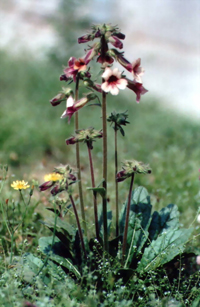
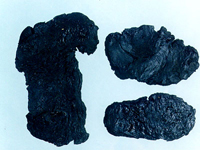
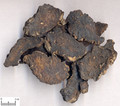
This medicinal is the prepared root tuber of Rehmannia glutinosa Libosch.(fam. Scrophulariaceae). After mixture with wine, Sharen and Chenpi, the crude root is processed with a series of steaming and drying by natural sunlight repeatedly until the whole root becomes black with a soft, sticky and greasy property. Then it is sliced or baked into charcoal for use.
[ Medicinal Properties ]: Sweet, slightly warm; relate to liver and kidney meridians.
[ Medicinal Efficacies ]: Nourish yin and tonify blood, replenish essence and marrow.
[ Clinical Applications]: 1. Blood deficiency syndrome It treats blood deficiency syndrome manifested as sallow complexion, dizziness,palpitations, insomnia, irregular menstruation, metrorrhagia and metrostaxis, in combination with Danggui, Baishao and Chuanxiong, as in Siwu Decoction. For palpations, fearful throbbings due to heart blood deficiency, it is combined with Yuanzhi and Suanzaoren; for metrorrhagia and metrostaxis, with Ejiao and Aiye.
2. Deficiency syndrome of liver-kidney yin It treats limpness of knees and lumbus, spermatorrha, night sweating, tinnitus, deafness and Xiaoke(diabetes), due to deficiency of liver-kidney yin, in combination with Shanyao and Shanzhuyu, as in the Liuwei Dihuang Pill. For yin deficiency with bone-steaming tidal fever, it is combined with Zhimu and Huangbo. In the case of early graying of hair due to insufficiency of essence and blood, it is used with Heshouwu and Niuxi.
In addition, cardbonized Shudihuang has the function of stop bleeding, so it is able to treat hemorrhage due to blood deficiency, such as metrorrhagia and metrostaxis.
[ Usage and Dosage ]: 10-30g.
[ Precautions ]: This medicinal is more sticky and greasy than Shengdihuang and may cause dyspepsia. Therefore, it is contraindicated in patients with qi stagnation, profuse phlegm, gastric and abdominal fullness, anorexia and loose stool. When used in large dosage for a long time, it should be used in comination with Chenpi and Sharen to avoid dyspepsia.
[ Medicinal Comparison ]: Clinically, Dihuang is categorized as fresh, crude and prepared Dihuang. Both have the function of nourishing yin and promoting body fluid and are indicated for deficiency syndrome of yin and fluid. Fresh Dihuang, sweet, bitter and extremely cold, is weak in nourishing yin, but good at clearing heat, cooling blood, purging fire to relieve dysphoria and indicated for syndrome of exuberance of pathogenic heat and yin deficiency with fluid inadequacy. Crude Dihuang, cool and moisty, has a mild action of cooling blood. It is good at nourishing yin of heart-kidney and appropriate for blood heat damaging yin or fever due to blood deficiency. Prepared Dihuang, sweet and warm, relates to the liver and kidney meridians. It has strong action of nourishing yin, tonifying blood and replenishing essence and marrow and is indicated for insufficiency of true yin, essence and marrow.
Similarities: Both Danggui and Shudihuang have similar actions of tonifying blood and treat blood deficiency syndrome.
Differences: Dangui also has the efficacy of activating blood, regulating menstruation, relieving pains and moistening intestines and is indicated for blood deficiency with stagnation, pain due to deficiency-cold, arthralgia due to wind-dampness, traumatic injuries, carbuncles, ulcers and sores, constipation due to intestinal dryness. Shudihuang , which is good at nourishing yin and replenishing essence and marrow, is indicated for limpness of knees and loins, spermatorrhea, night sweating, tinnitus, deafness, due to deficiency of liver-kidney yin, Xiaoke(diabets)and early graying of hair due to deficiency of essence and blood.
熟地黄为玄参科植物地黄Rehmannia glutinosa(Gdertn) Iibosch.的块根,经加工炮制而成。通常以酒、砂仁、陈皮为辅料经反复蒸晒,至内外色黑油润,质地柔软粘腻。切片用,或炒炭用。