Loading... Please wait...
Categories
New Products
-
 $9.99
$9.99
-
 $9.99
$9.99
-
 $199.00
-
 $0.00
$0.00
-
 $129.00
Our Newsletter
- Home
- Single Herbs Powder( 100g/bottle ) ---中药单味(粉剂)
- Anthelmintics---驱虫药
- Kulianpi (Szechwan Chinaerry Bark)---苦楝皮
- Home
- Natural Herbs (1 Ib/bag )---天然草药
- Kulianpi (Szechwan Chinaerry Bark)---苦楝皮


Product Description
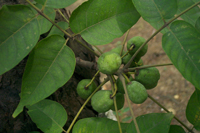
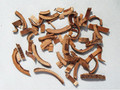
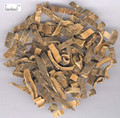
This medicinal is the stem bark or root bark of Melia toosendan Sieb. et Zucc or Melia azedarach L (Fam. Chinaberry). The former is mainly productd in Sichuan. It is collected in spring and summer. After the cork is removed, the fresh bark is washed clean to e utilized in its unprocessed form. The dried form is sliced in pieces for use, after thorough maceration.
[ Medicinal Properties ]: Bitter, cold and toxic; relate to spleen, stomach and liver meridians.
[ Medicinal Efficacies ]: Dispel worms; treat tinea.
[ Clinical Applications ]: 1. Intestinal parasitic disease As a potent parasite-killer, it is used to destroy fvarious parasites; yet, it is effective for ascared. For ascariasis, it is decocted alone or processed into pills or syrup. It is also used in combination with Binglang and Shijunzi.
2. Acariasis and eczema In this case, it is ground into powder by itself, mixed with vinegar or pig fat and applied on the affected parts. Also it can be used in combination with Huangbo, Kushen and Mingfan( alum).
[ Administration and dosage] : 4.5-9g. Appropriate amount for external application.
[ Precautions ]: It is toxic, so continuous or overusage of this medicinal should be avoided. Due to the insolubility of its active ingredients in water, it should be simmered with wild fire for a long period of time.
苦楝皮 为楝科植物楝Melia azedarach L.或川楝M.toosendan Sieb .et Zucc.的干燥树皮及根皮。前者全国大部分地区均产,后者主产于四川、湖北、贵州、河南等地。四时可采,但以春、秋两季为宜。剥取根皮或干皮,刮去栓皮,洗净。鲜用或切片生用。